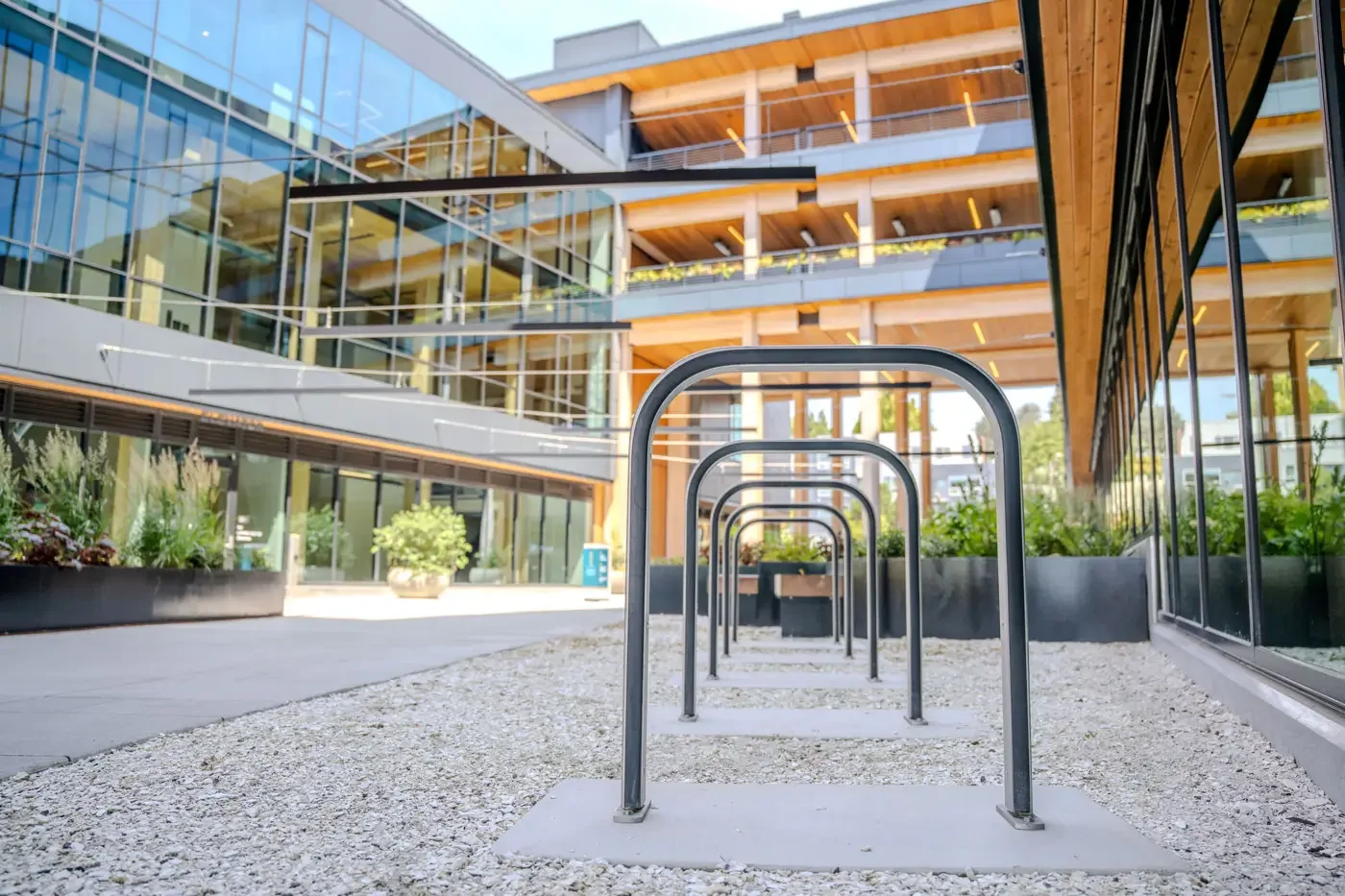
Six key takeaways for architects, planners, transit agencies, campuses, and communities designing the next generation of infrastructure.
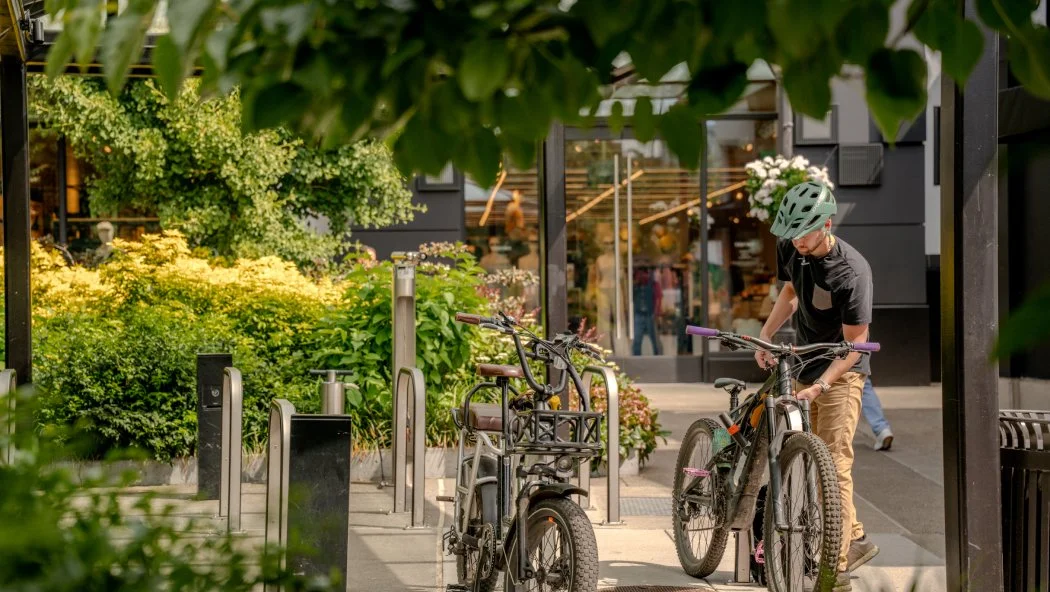
For decades, bicycle parking was often treated as a site requirement, something added at the end of a project to satisfy code or provide a basic amenity. Today, bicycle parking plays a much larger role in supporting first- and last-mile connectivity to public transit, featured amenities, and broader mobility accessibility.
The Association of Pedestrian and Bicycle Professionals (APBP) recently released its first major update to the Bicycle Parking Guidelines in more than a decade. While many of the core principles of effective bicycle parking remain unchanged, the new guidance recognizes significant shifts in cycling, and the growing role bicycle parking plays within connected transportation networks.
Here are six key takeaways from the new guidelines, and what they signal about the future of mobility.
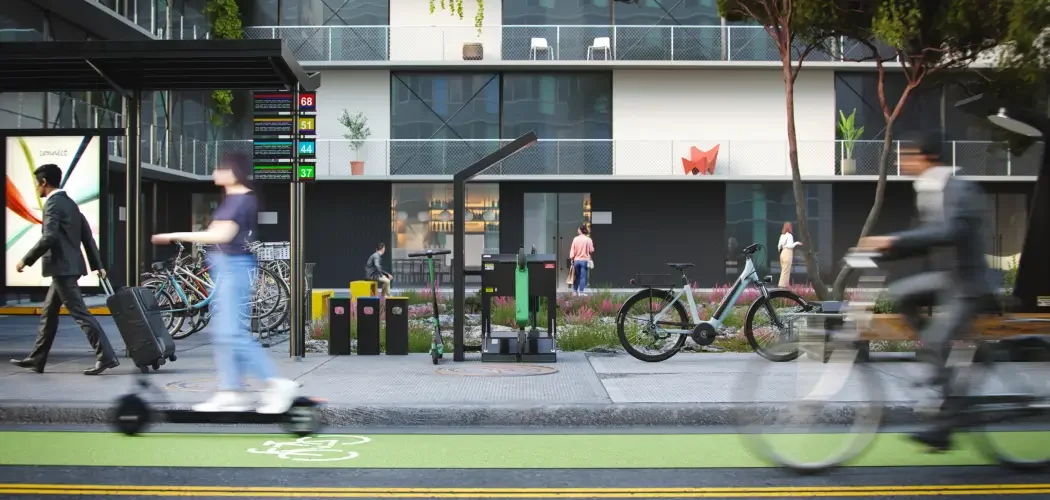
1. Bike Parking Is Now Part of a Larger Mobility System
Previous APBP guidance focused heavily on bicycle parking infrastructure itself. The new edition expands the conversation to consider how bike parking supports broader transportation goals.
Today's planning and design decisions must account for connections between:
Public transit
Pedestrian paths
Micromobility services
Shared transportation systems
Rather than treating bike parking as a standalone amenity, the updated guidance encourages planners to view it as a critical component of a connected mobility network.
This shift isn't surprising; over the past decade, transportation professionals have increasingly focused on creating seamless connections between biking, walking, and transit. Bicycle parking remains a critical piece of that puzzle, but it's increasingly being planned alongside bike-on-transit programs, first- and last-mile connectivity strategies, micromobility infrastructure, and other mobility solutions designed to reduce dependence on single-occupancy vehicles.
The Sportworks Perspective
While the concept of connected mobility continues to evolve, one thing has become increasingly clear: the quality of the rider experience matters. A bike lane only works if riders have confidence they'll find convenient, secure parking at the end of their trip.
We've seen agencies, campuses, and employers place greater emphasis on removing friction throughout the rider journey, from upgraded bike-on-bus amenities, to final destination parking. The most successful projects aren't evaluated solely by the number of bicycle parking spaces provided, but how they are utilized and how effective they are in helping people choose cycling as a practical transportation option.
As communities continue investing in multimodal transportation, bicycle parking will play an increasingly important role in connecting infrastructure investments to real-world ridership outcomes.
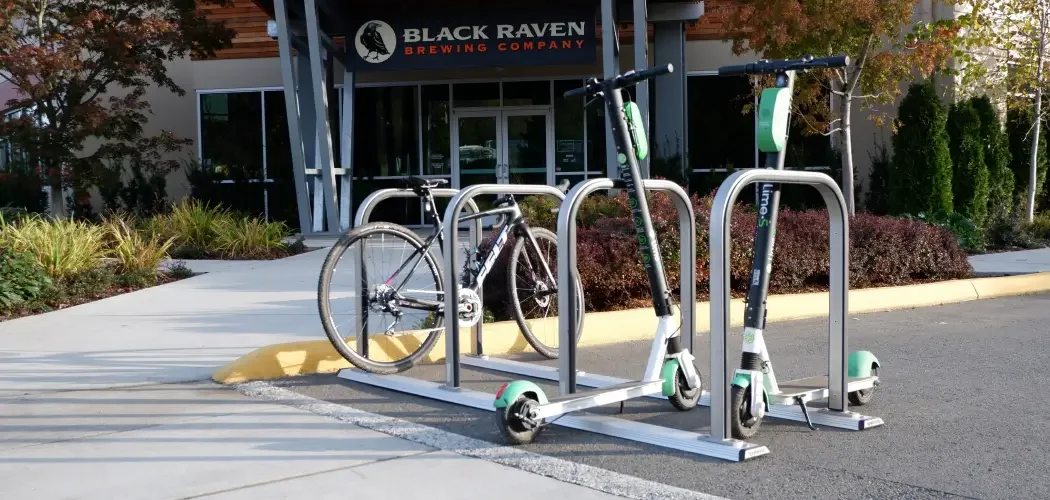
2. Today's Bicycle Facilities Must Serve More Than Bicycles
When the last major APBP guidance was published, traditional bicycles dominated the landscape. Today, riders are arriving on a much wider range of vehicles.
The new guidelines acknowledge the growing presence of:
E-bikes
Cargo bikes
Adaptive bicycles
Long-tail bicycles
Other micromobility devices
This means planners should consider whether existing parking layouts and rack selections can accommodate the diversity of devices now using bicycle facilities.
Anyone involved in bicycle parking planning has likely seen this shift firsthand. Bikes today have far more variation in style and function than in the past. Longer wheelbases, fat-tire bikes, heavy e-bikes with wider tires. This variation presents new considerations for parking layouts, spacing, and overall facility design.
In many communities, the value of those bicycles has changed as well. The growth of e-bikes and specialty bicycles has increased both the investment riders make in their equipment and their expectations for convenient, secure, and environmentally-protected parking.
The Sportworks Perspective
One of the biggest changes we've seen over the past decade is the growing diversity of vehicles using bicycle parking facilities. E-bikes, cargo bikes, adaptive cycles, and family-hauling bicycles are becoming increasingly common, bringing new requirements for space, access, weight capacity, and security.
For planners and facility owners, this means bicycle parking decisions should extend beyond rack count alone. This includes evaluating rack styles – and ensuring that space is available for bikes that are too heavy to be lifted, re-considering spacing between bikes, and parking configurations that can support larger and non-traditional bicycle types. The goal is no longer simply to maximize parking density, but to also create facilities that comfortably accommodate a wider range of bicycle types and rider needs. Projects that account for this shift today are more likely to remain effective and be more utilized as cycling continues to evolve.
3. Accessibility Is No Longer an Afterthought
One of the most significant updates is the increased focus on accessibility.
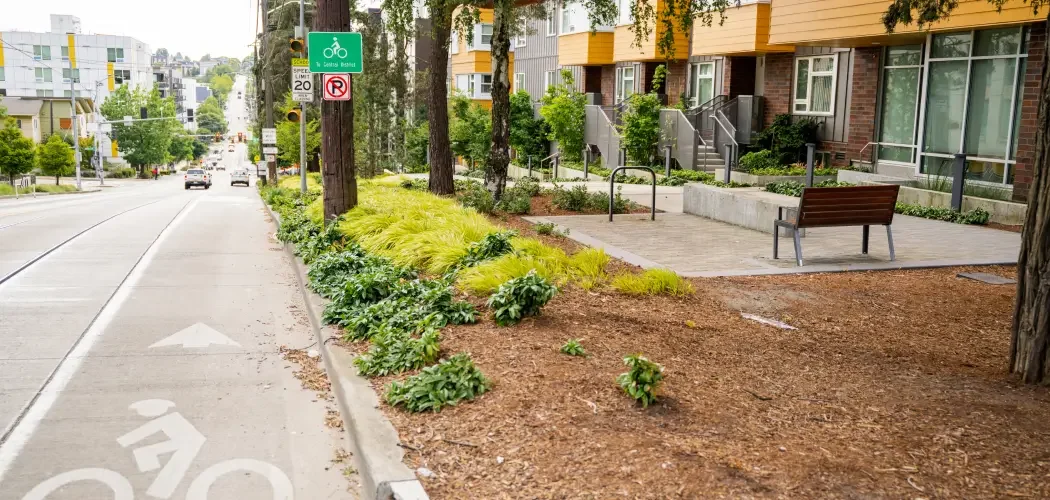
The guidelines encourage planners to think beyond minimum clearances and consider how bicycle parking interacts with pedestrians, people using mobility devices, and riders with varying physical abilities.
Questions planners should ask include:
Can users comfortably access and maneuver around parking areas?
Is there adequate space for adaptive cycles?
Does the installation support safe pedestrian movement?
Are facilities located where they can be conveniently accessed by all users?
Accessibility considerations often benefit all users, not just those with specific mobility needs. Clear circulation paths, intuitive layouts, and convenient access points improve the parking experience for everyone, helping remove barriers to bicycle transportation.
The Sportworks Perspective
Accessibility is often associated with meeting minimum design requirements, but the most successful bicycle parking facilities go further. They consider how people of different ages, abilities, and mobility needs approach, use, and navigate a space.
We've seen that small design decisions, such as parking layout, circulation paths, rack placement, and proximity to destinations, can have a significant impact on the overall user experience. As bicycle transportation becomes more diverse, accessibility is becoming less about compliance and more about creating facilities that work for everyone.
Consider the standard U-rack placed adjacent to a sidewalk or pedestrian route. Without proper design considerations, many rack installations can encroach on ADA-required circulation paths and present hazards for individuals with visual impairments. Specifying racks with cane-detectable elements or compact footprints is a simple way to improve accessibility and achieve compliance.
The best bicycle parking is intuitive, convenient, and welcoming from the moment a rider arrives.
4. Equity Plays a Bigger Role in Bike Parking Decisions
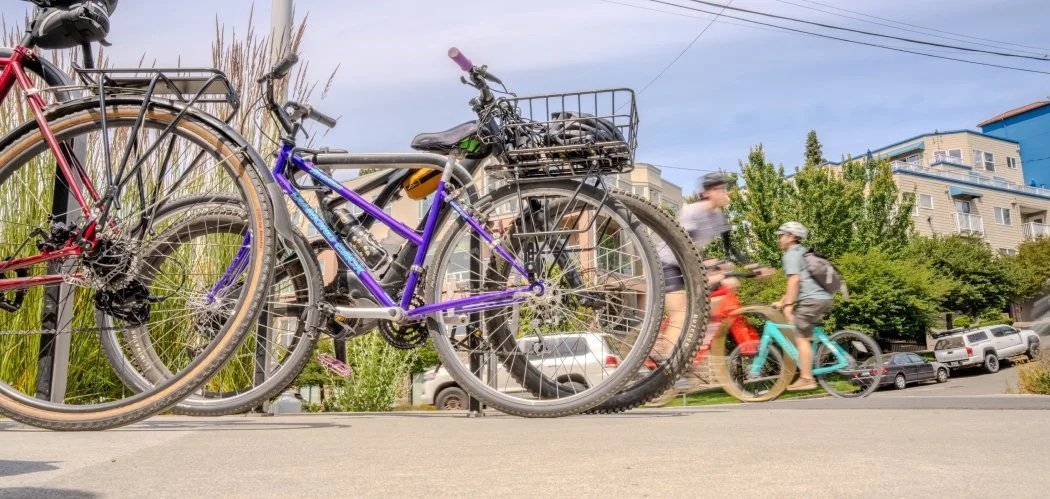
The updated guidance places greater emphasis on equitable access to bicycle parking infrastructure.
Communities are encouraged to evaluate not only the quality of parking facilities, but also where those facilities are located and who they serve.
This includes considering:
Affordable housing developments
Community destinations
Schools & public facilities
Transportation hubs
Underserved neighborhoods
The goal is to create bicycle parking that works for more people, in more places, and for more types of trips. For planners, this means looking beyond individual project sites and considering how bicycle parking supports schools, parks, transit facilities, commercial districts, and community destinations throughout a city or campus.
As communities invest in active transportation, the question is increasingly shifting from "Where should we provide bicycle parking?" to "Who are we trying to serve, and how can bicycle parking help them reach their destination?"
The Sportworks Perspective
Equitable bicycle parking isn't just about distributing infrastructure evenly, it's about ensuring people have reliable access to the places they need to go. As communities work to expand transportation options, bicycle parking and transport can play an important role in connecting residents to jobs, schools, transit, healthcare, and other essential destinations.
We've seen agencies and institutions increasingly prioritize bicycle parking as part of broader efforts to improve mobility and access across their communities. When thoughtfully planned, bicycle parking can help remove transportation barriers, support multimodal travel, and expand transportation choice for a wider range of users.
The most successful projects look beyond individual sites and consider how bicycle parking contributes to a connected, accessible transportation network.
5. The Fundamentals Still Matter
While the scope of the guidelines has expanded, the core principles of effective bicycle parking remain largely unchanged.
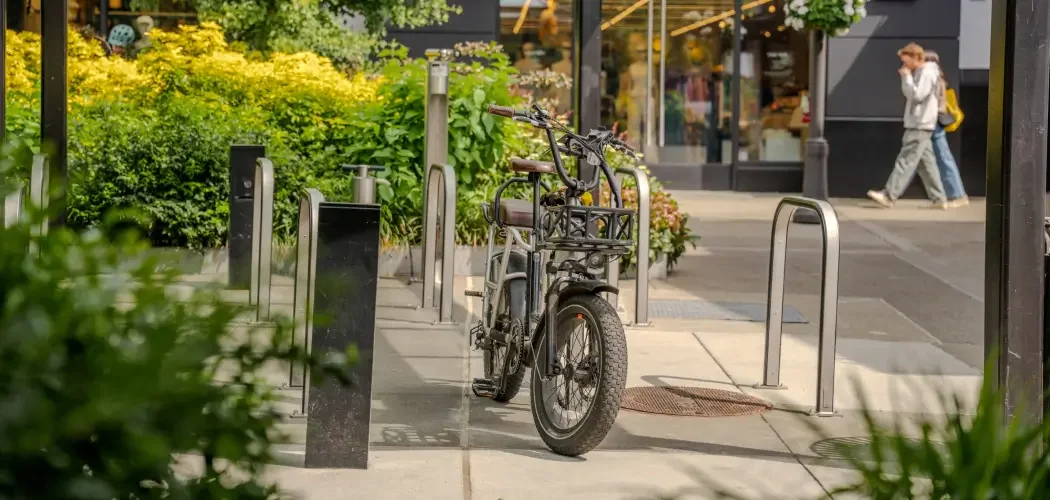
A successful bicycle parking installation should still:
Support the bicycle
Tailor to a variety of bicycle styles
Allow secure locking of both the frame & wheel
Be durable & secure
Be intuitive to use
A quality rack can only do its job if it's installed thoughtfully. Limited access, tight spacing, or poor placement can quickly turn an otherwise effective solution into an underused one.
The Sportworks Perspective
While bicycle parking continues to evolve, the fundamentals remain the foundation of every successful installation. The best facilities still make it easy for riders to park, secure, and access their bicycles with confidence.
Thoughtful bicycle parking starts with understanding how people will interact with a space. Not every location requires the same type of rack, and the best solutions are often those that respond to user behavior rather than relying on a one-size-fits-all approach.
For example, racks with wheel wells or wheel slots can be an excellent choice in parks, playgrounds, and other recreational settings where cyclists are making short visits and keeping their bicycles within sight. A parent accompanying a child to a playground may not need to secure their bike with a U-lock for a 10-minute stop, but they do need a convenient way to keep it upright and out of the pedestrian path. In these situations, a wheel-supporting rack can provide a simple, intuitive parking experience that matches how the space is actually used.
The latest guidance encourages designers to think beyond minimum requirements and consider the context, duration of stay, and user needs. By selecting parking solutions that align with real-world behavior, architects and planners can create bicycle facilities that are not only functional but also more welcoming and convenient for the people who rely on them.
6. Security Expectations Have Changed
As cycling has evolved, so have rider expectations around bicycle security.
The growth of e-bikes, cargo bikes, and premium bicycles has increased the value of the equipment riders leave behind. In many cases, today's bicycles represent a significant financial investment and an essential transportation tool for daily commuting.
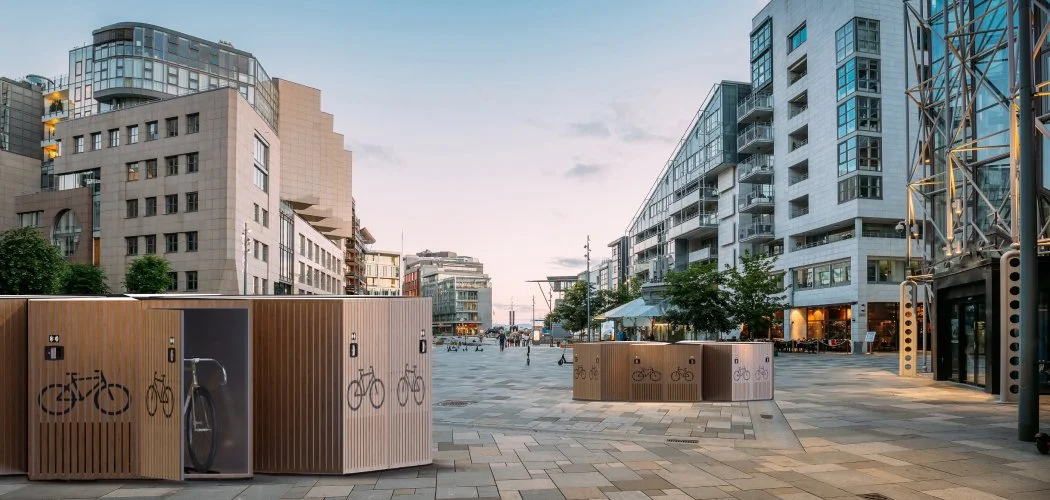
As a result, communities are increasingly evaluating bicycle parking through the lens of security as well as convenience. Depending on the location and duration of parking, this may include considerations such as visibility, lighting, access control, monitored facilities, weather protection, and secure long-term storage options.
While traditional bicycle racks remain an important part of the bicycle parking ecosystem, many are also exploring solutions that support higher levels of security for transit riders, employees, students, and residents.
The Sportworks Perspective
Security has become one of the most important factors influencing whether people choose to ride.
As bicycles have become increasingly common for both commuting and recreation, they have also grown significantly more sophisticated and expensive. The rise of e-bikes and other specialty models has increased the value of the average bicycle while technology has also expanded the range of accessories riders carry. As a result, cyclists are seeking more than basic bike racks, they want fully enclosed, highly secure parking solutions that protect their investment from theft, damage, and vandalism. Riders also need confidence that accessories and removable components will remain safe and intact. This need is especially critical in long-term parking environments, such as transit stations, workplaces, residential buildings, and mobility hubs, where bicycles may be left unattended for extended periods and are exposed to greater security and weather-related risks.
This shift is helping drive interest in a broader range of bicycle parking solutions, from covered and monitored facilities to secure access-controlled environments. As bicycle transportation continues to grow, security is increasingly a critical part of the rider experience.
Looking Ahead
The updated APBP guidelines reflect a fundamental shift in how communities think about bicycle transportation.
Bicycle parking is no longer viewed simply as an amenity or a requirement to satisfy project standards. It is increasingly recognized as an essential piece of mobility infrastructure that deserves the same level of thoughtfulness applied to other elements of the built environment. By considering factors such as user needs, trip purpose, security, accessibility, and context, designers and planners can create bicycle parking that not only accommodates riders but also contributes to a more connected, functional, and welcoming community.
While the conversation around bicycle parking continues to evolve, the goal remains the same: making it easier, safer, and more convenient for people to choose bicycling as part of everyday life.
At Sportworks, we believe great bicycle infrastructure does more than support bikes, it supports people. For more than 30 years, we've partnered with planners, architects, public agencies, campuses, and property owners to create solutions that improve access, strengthen connections, and help build more bike-friendly communities. Whether you're updating design standards, planning a new facility, or evaluating bicycle parking options for an upcoming project, our team is here to help.
Explore our bicycle parking solutions or contact our team of experts to discuss your next project.